Source dc 12v aquarium cooling fan for Experiment, Manufacture, Air Conditioner
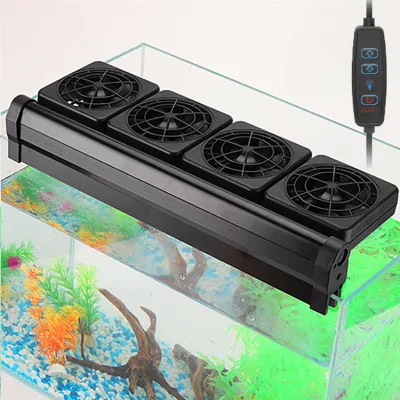
Compare 30 verified options for the dc 12v aquarium cooling fan, featuring diverse certifications like RoHS and CE, and customizable speeds. Buyers can evaluate models with axial or centrifugal flow for experiment, manufacture, and air conditioner applications.
Key considerations
Products List




Comprehensive Sourcing Guide
Sourcing Guide for DC 12V Aquarium Cooling Fans
Understanding Technical Specifications and Performance Metrics
When sourcing a DC 12V aquarium cooling fan, the primary objective is to identify a unit that balances airflow efficiency with operational silence. The provided product data indicates that the market offers fans with varying dimensions, which is critical for fitting specific aquarium ventilation setups. For instance, observed specifications include axial fans with dimensions such as 120x120x32mm and 120x120x38mm, alongside other models like the YDH1232B12 and YDH7010B12. Buyers must verify that the physical footprint of the fan matches the available space in their aquarium hood or external cooling housing. The standard dimensions observed range from compact 70x70x150mm units to larger 465x290x290mm assemblies, though the latter may be more suited for industrial or large-scale manufacturing applications rather than standard home aquariums.
Electrical compatibility is the second pillar of technical selection. The core keyword specifies a DC 12V requirement, and the available data confirms that DC electric current types are a standard offering. Specific models, such as the FAN5010, operate within a voltage range of 12~24V, providing a degree of flexibility for power supply units that may fluctuate slightly. However, buyers must strictly verify the input voltage before connecting to a 12V DC power source to prevent damage. The data also highlights the availability of different wire configurations, including 2-wire, 3-wire, and 4-wire options. A 4-wire configuration often implies support for PWM (Pulse Width Modulation) control, allowing for variable speed adjustment, which is highly desirable for aquariums where noise reduction is a priority. The presence of functions like Rd, Fg, and PWM in the product attributes suggests advanced control capabilities, but these must be confirmed against the specific controller or power supply being used.
Airflow and noise performance are equally critical. The observed data lists air flow rates between 3.68 and 6.5 cfm for certain models, with noise levels ranging from 24 to 30 dBA. These figures are indicative of the performance envelope available in the current market. For an aquarium environment, lower noise levels are essential to avoid disturbing the aquatic life and the household. The bearing type is another significant technical differentiator; the supply data mentions both Ball Bearing and Sleeve Bearing options. Ball bearings generally offer a longer lifespan and better performance at higher speeds, whereas sleeve bearings may be quieter at lower speeds but have a shorter operational life. Buyers should prioritize the bearing type based on their expected usage duration and the specific acoustic requirements of their setup.
Compliance and Certification Verification
Navigating the compliance landscape is essential for ensuring that the purchased cooling fans meet safety and environmental standards. The product data reveals a variety of certifications held by different suppliers, including RoHS, ISO, CE, UL, CCC, and UR. RoHS (Restriction of Hazardous Substances) is a critical certification for electronic components, ensuring that the fan does not contain lead, mercury, or other hazardous materials that could leach into the aquarium environment or the surrounding air. ISO certification indicates that the manufacturer adheres to international quality management standards, which is a strong indicator of consistent production quality.
The presence of CE and UL certifications is particularly important for electrical safety. CE marking signifies conformity with health, safety, and environmental protection standards for products sold within the European Economic Area, while UL (Underwriters Laboratories) is a widely recognized safety certification in North America. The data also lists CCC (China Compulsory Certification), which is mandatory for products sold within China but serves as a baseline for domestic manufacturing quality. For buyers in other regions, the presence of UL or CE is often more relevant for insurance and safety compliance. It is important to note that not every listed product carries every certification; for example, some models are listed with RoHS, ISO, and CE, while others include UL and CCC. Buyers must explicitly request certification documentation for the specific model they intend to purchase rather than assuming that all products in a category share the same compliance status.
Furthermore, the material composition of the fan plays a role in compliance and safety. The observed materials include Plastic, Stainless Steel, Iron, and Aluminum Fan components. Stainless steel and aluminum are often preferred for their corrosion resistance, which is vital in the humid environment of an aquarium. Plastic components must be verified for fire resistance and durability. The data also mentions "Customized Packages" and "Carton Box" as packing standards, which can impact the protection of the unit during shipping and its suitability for retail or industrial distribution. Buyers should ensure that the packaging meets the necessary standards for their specific logistics chain to prevent damage before the product reaches the end user.
Cost Drivers and Pricing Structures
The pricing for DC 12V aquarium cooling fans is influenced by several factors, including material quality, certification levels, and customization requirements. The observed price range in the market spans from $0.27 to $1,999, a wide variance that reflects the diversity of products from basic components to specialized industrial assemblies. The lower end of this spectrum likely corresponds to standard plastic or iron fans with basic specifications, while the higher end may include units with advanced features like PWM control, premium bearings, or custom enclosures.
Minimum Order Quantity (MOQ) is a significant cost driver in B2B procurement. The data indicates an MOQ range of 1 to 1,000 units. Buyers seeking small quantities or prototypes can find suppliers with an MOQ of 1, which is ideal for testing or small-scale aquarium setups. However, for bulk procurement, the MOQ may increase to 1,000 units, which can significantly impact the unit cost. The data also notes that OEM services are "Based on 1000PCS," suggesting that custom branding or design modifications typically require a larger volume commitment. This threshold is a standard industry practice to amortize the costs of tooling and setup.
Customization is another factor that drives up costs. The product attributes list "Customization: Available" and "OEM & ODM: Available," indicating that buyers can request specific modifications. However, these customizations often come with a premium price and potentially longer lead times. The "Sales Way: Factory Direct Supply" suggests that bypassing intermediaries can help reduce costs, but buyers must ensure they are dealing with the actual manufacturer to avoid markup. Additionally, the "Sample: Free" attribute offers an opportunity for buyers to evaluate product quality before committing to a larger order, which can mitigate the financial risk of sourcing the wrong specifications.
Typical Applications and Usage Scenarios
While the core keyword focuses on aquarium cooling, the product data reveals a broader range of applications, including "for Experiment," "for Air Conditioner," and "for Manufacture." This versatility suggests that the same cooling fan technology can be adapted for various environments. In the context of aquariums, the primary application is maintaining optimal water temperature by circulating air over the water surface or through a dedicated cooling unit. The "Flow Direction: Centrifugal" and "Axial Fan" types listed indicate that different airflow patterns are available, allowing buyers to select the most efficient configuration for their specific tank layout.
The "Pressure: Medium Pressure" attribute is relevant for applications where the fan must overcome resistance, such as pushing air through filters or ducting. For standard aquarium setups, axial fans are typically sufficient for open-air cooling, while centrifugal fans might be necessary for enclosed systems or where air needs to be directed through a specific path. The "Mounting: Free Standing" option provides flexibility in installation, allowing the fan to be placed on a shelf or inside a cabinet without the need for complex mounting hardware.
It is crucial for buyers to distinguish between general-purpose fans and those specifically designed for aquatic environments. While the data lists "for Manufacture" and "for Experiment," these applications may involve different environmental conditions, such as higher humidity or exposure to chemicals, which could affect the fan's longevity. Buyers should verify that the selected fan is suitable for the specific humidity levels and temperature ranges of their aquarium setup. The "Usage" attributes also highlight the importance of selecting a fan that can operate continuously, as aquarium cooling systems often run 24/7 to maintain stable conditions.
Supplier Evaluation and Quality Assurance
Evaluating suppliers requires a careful review of their capabilities, certifications, and production standards. The data indicates that the products originate from China, a major hub for manufacturing electronic components. Buyers should verify the supplier's ability to provide "Factory Direct Supply" to ensure they are getting competitive pricing and direct access to technical support. The availability of "OEM & ODM" services suggests that the supplier has the capacity for custom manufacturing, which is a positive indicator of flexibility and technical competence.
Quality control is paramount, especially for products that will operate in sensitive environments like aquariums. The presence of ISO certification is a strong indicator of a supplier's commitment to quality management systems. Buyers should request evidence of quality control processes, such as in-line testing and final inspection protocols. The "Sample: Free" option is a valuable tool for quality assurance, allowing buyers to physically inspect the product for build quality, noise levels, and airflow performance before placing a large order.
The "Lead Wire" and "Function" attributes, such as the availability of 2-wire, 3-wire, and 4-wire options, also serve as indicators of the supplier's technical sophistication. A supplier that offers a wide range of configurations is likely to have a robust manufacturing process and a deep understanding of customer needs. Buyers should also check the "prod_packing" standards to ensure that the supplier uses appropriate packaging to protect the fans during transit. The "Carton Box" and "Customized Packages" options suggest that the supplier can adapt their packaging to meet specific requirements, which is essential for maintaining product integrity.
Long-Term Procurement and Maintenance Considerations
Long-term procurement success depends on selecting fans that offer durability and ease of maintenance. The "Bearing Type: Ball Bearing/Sleeve Bearing" distinction is critical here. Ball bearings are generally more durable and suitable for continuous operation, making them a better choice for aquariums where the fan may run for years without interruption. Sleeve bearings, while potentially quieter, may require more frequent replacement. Buyers should consider the total cost of ownership, including the cost of replacement parts and the labor required for maintenance.
The "Speed: Custimized" and "Speed: 7000-10000rpm" attributes indicate that speed control is a key feature. For long-term use, the ability to adjust the fan speed can help reduce wear and tear, extend the lifespan of the unit, and lower energy consumption. The "Function: Rd, Fg, PWM" attributes suggest that the fans can be integrated into automated control systems, allowing for precise temperature management and energy efficiency.
Finally, buyers should consider the availability of spare parts and the supplier's support for after-sales service. The "OEM & ODM: Avaiable" attribute implies that the supplier can produce replacement parts or modified units if the original design becomes obsolete. The "Sales Way: Factory Direct Supply" also suggests that buyers may have direct access to technical support and warranty services. By prioritizing suppliers with strong quality control, flexible customization options, and a commitment to long-term support, buyers can ensure a reliable and cost-effective cooling solution for their aquariums.
FAQs
What certifications do these fans have?
These fans hold certifications including RoHS, ISO, CE, UL, CCC, and UR. Buyers must verify specific documentation for the model they select, as not every product carries all listed certifications.
Which bearing types are available for these fans?
The available bearing types are Ball Bearing and Sleeve Bearing. Ball bearings generally offer longer lifespans for continuous operation, while sleeve bearings may be quieter at lower speeds.
Can I customize the fan specifications for my aquarium?
Customization is available for these fans, including OEM and ODM services. However, custom branding or design modifications typically require a minimum order quantity of 1000 pieces.
What is the price range for these cooling fans?
The observed price range spans from 0.27 to 1999 USD. Costs vary significantly based on material quality, certification levels, and whether the unit is a standard component or a specialized assembly.
How do I verify the voltage compatibility for a 12V setup?
Some models operate within a voltage range of 12 to 24V, providing flexibility. Buyers must strictly verify the input voltage before connecting to a 12V DC power source to prevent damage.
What are the standard dimensions for these axial fans?
Standard dimensions include 120x120x32mm, 120x120x38mm, and 70x70x150mm. Buyers must verify the physical footprint matches the available space in their aquarium hood or cooling housing.
Can I get free samples before placing a large order?
Free samples are available for buyers to evaluate product quality. This allows inspection of build quality, noise levels, and airflow performance before committing to a larger purchase.